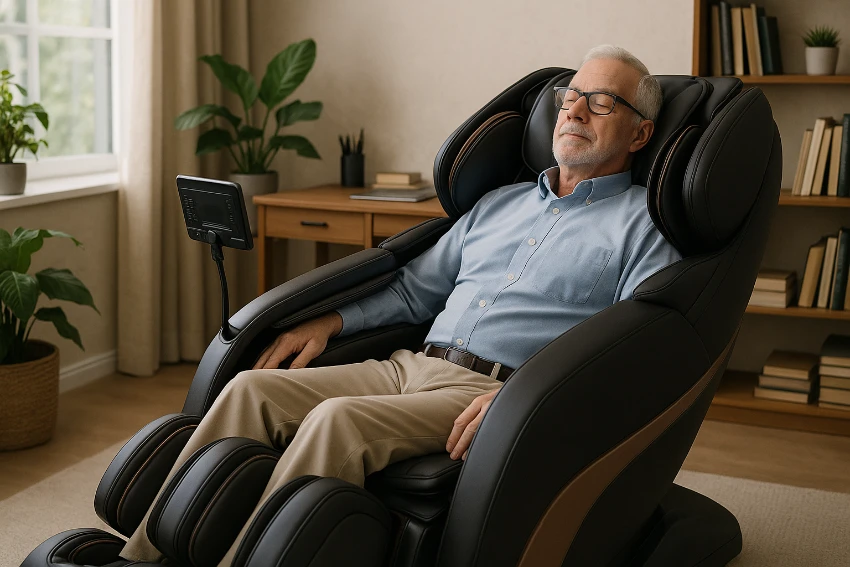
The wellness industry has shifted dramatically over the past decade. What used to require spa appointments, private therapists, or gym memberships has become increasingly available at home. One of the most impactful advancements in this space is the rise of electric massage chairs—devices that combine biomechanics, neuroscience, and ergonomic engineering to create fully personalized recovery experiences.
As stress, burnout, and sleep disorders continue to rise, more people are turning to daily at-home therapies. Electric massage chairs are no longer considered a luxury item; they’ve emerged as a practical, scientifically supported tool for maintaining physical health and managing emotional well-being.
In this article, we explore how electric massage chairs fit into the modern wellness movement, the science behind their benefits, and why they’ve become essential for today’s busy lifestyles.
Global consumer behavior shows a clear trend: people increasingly prefer wellness solutions they can access anytime, without appointments or scheduling barriers. The wellness technology market is projected to reach over $600 billion in value, with a large portion dedicated to home-use recovery equipment.¹
Electric massage chairs fit perfectly into this landscape because they combine relaxation, pain relief, mobility support, and mental wellness—all in one device.
Massage therapy is one of the oldest forms of healing, with scientific evidence supporting its effectiveness in reducing stress, relieving muscle tension, and improving mobility. But until recently, access required professional therapists.
Electric massage chairs translate the principles of manual therapy into mechanical, repeatable movements using:
Massage chairs activate multiple body systems:
Rollers stretch tight muscles and break down adhesions.
Heat and compression increase blood flow.
Calming pressure stimulates parasympathetic responses, lowering heart rate and reducing anxiety.
Compression and rhythmic motion help move stagnant fluid, reducing swelling.
These combined effects explain why electric massage chairs are highly effective at reducing pain, accelerating recovery, and improving emotional well-being.
The modern world exposes us to constant stressors—deadlines, notifications, traffic, caregiving, financial pressure, and social demands. Over time, chronic stress dysregulates the autonomic nervous system.
Massage chairs provide nervous system regulation, which is essential for health and longevity.
For people experiencing burnout, massage chairs offer structured daily resets—short, consistent sessions that create long-term improvements.
With remote work increasing, musculoskeletal disorders—especially neck, back, and shoulder pain—are rising. Poor posture leads to muscle imbalances, spinal compression, and nerve irritation.
Electric massage chairs address these issues through:
3D and 4D rollers target deep knots, chronic tension, and overused muscles.
Many chairs include programs that:
This is especially helpful for people with sedentary jobs or long commutes.
Massage improves flexibility and joint function by increasing circulation and warming connective tissues.
As we age:
Massage chairs counteract many age-related changes by keeping tissues supple and active.
Studies show that regular massage improves mobility in older adults and reduces chronic pain by enhancing circulation and reducing inflammation.³
This is one area most people overlook—massage has powerful psychological effects.
Even 10–20 minutes can:
This is because massage stimulates the vagus nerve, which regulates emotional balance.⁴
Massage chairs create opportunities to:
These rituals significantly improve resilience and emotional well-being.
Athletes increasingly rely on recovery tools as part of training—and electric massage chairs are one of the most effective.
Massage chairs help release lactic acid, which builds up during intense workouts. They also improve lymphatic drainage, which supports faster recovery.
Sports teams and training centers now commonly use massage chairs because they provide consistent, repeatable, and customizable recovery sessions.
Sleep disorders affect millions of adults, and much of this is connected to stress, hyperarousal, and muscle tension. Massage chairs support better sleep by:
Studies show that massage increases delta waves—the brain waves required for deep, restorative sleep.⁵
Many users find that a 15-minute full-body massage before bed dramatically improves their ability to fall asleep and stay asleep.
A single massage therapy session averages $80–$150 depending on location. A weekly appointment can cost more than:
$5,000 per year
In contrast, a high-quality electric massage chair:
The long-term cost per session becomes extremely low—often less than $1 per use over time.
Modern electric massage chairs use AI body scanning to:
This adaptive technology ensures safe, effective, and targeted treatment, even when used daily.
Newer models even remember user preferences and automatically adjust to each person’s unique body.
Wellness technology is becoming integrated into regular healthcare. In the coming years, massage chairs may be widely recommended for:
As preventive care becomes more important, massage chairs will likely become a standard device in homes—much like treadmills, stationary bikes, and air purifiers.
Electric massage chairs are far more than a luxury—they’re a powerful wellness tool supported by science. They help regulate stress, relieve pain, support posture, boost mobility, improve sleep, and enhance emotional well-being. With technology advancing rapidly, massage chairs will continue to play a major role in the future of home wellness and preventive self-care.
¹ Global Wellness Institute, “Wellness Economy Research.”
² Diego, M. & Field, T. “Moderate pressure massage and vagal activity.” International Journal of Neuroscience.
³ Moyer, C. et al. “A meta-analysis of massage therapy and pain reduction.” Psychological Bulletin.
⁴ Porges, S. “Vagal pathways and emotional regulation.” Polyvagal Theory.
⁵ Field, T. “Massage therapy and sleep improvement.” Sleep Medicine Reviews.